HOME / SERVICE AREA /
LOCAL TREE CARE
Tree Too Close to the House? How Removal Can Happen Without Damaging It
Check out Our Recent Blogs
Plant healthcare professionals are leading the way in designing and implementing water-wise landscapes that reduce irrigation needs. Techniques such as drought-tolerant plants, efficient irrigation systems, and rainwater harvesting are used. This way, landscapes remain beautiful and sustainable, even in areas with less water.
4. Implementing Water-wise Landscaping
Bees, butterflies, and other pollinating friends are essential in our ecosystems. Professionals are building gardens that welcome these creatures. Planting a mix of flowers that bloom at different times of the year ensures that pollinators have a consistent food source. Avoiding pesticides and providing natural habitats can make our gardens safe havens for pollinators.
6. Supporting Pollinators in Our Gardens
9. Light Management: Mimicking Natural Rhythms
Especially vital for indoor plants, understanding a plant's light needs is crucial. Too much can scorch them, while too little can lead to weak growth. If natural light is insufficient, consider LED grow lights that can be tailored to a plant's specific needs.
Professionals use technology to help them do more efficient landscaping. From sophisticated irrigation controllers that adjust watering based on weather conditions to drones that monitor plant health from above, plant healthcare professionals are leveraging technology to make landscape management more efficient and effective.
Plant healthcare professionals are most important in landscape management. Through their dedication to sustainable practices, they are enhancing the beauty and health of landscapes and contributing to the planet's well-being. They show how it is possible to create outdoor spaces that are both stunning and sustainable.
7. Using Technology
Some firewood delivery services offer sustainably sourced wood for eco-conscious customers. This means the wood comes from forests that are replanted and managed responsibly. You can enjoy your fire by choosing a sustainable option, knowing you're not harming the environment.
Sustainable Firewood Options
The best delivery services go beyond just dropping off wood. Some companies offer friendly and knowledgeable staff who can answer your questions about firewood types, burning techniques, or fireplace maintenance. This personalized touch can make a big difference in your firewood buying experience.
Delivery with a Personal Touch
Assess the Situation
Water scarcity is a constant concern in Southern California. Smart irrigation systems use a combination of sensors, weather data, and historical water usage patterns to create an irrigation plan that delivers the precise amount of water each plant needs. This not only conserves water but also prevents plants from suffering from water stress, which can weaken them and make them more susceptible to disease.
These advanced technologies are just the beginning of a revolution in
plant healthcare. As research and development continue, we can expect even more innovative solutions to emerge, such as gene editing for disease resistance and robots for targeted weed removal. By embracing these advancements, Southern California's farmers can ensure the health of their crops, optimize resource use, and contribute to a more sustainable agricultural future, feeding a growing population while protecting the environment for generations to come.
5. Biological Pest Control: A Sustainable Approach
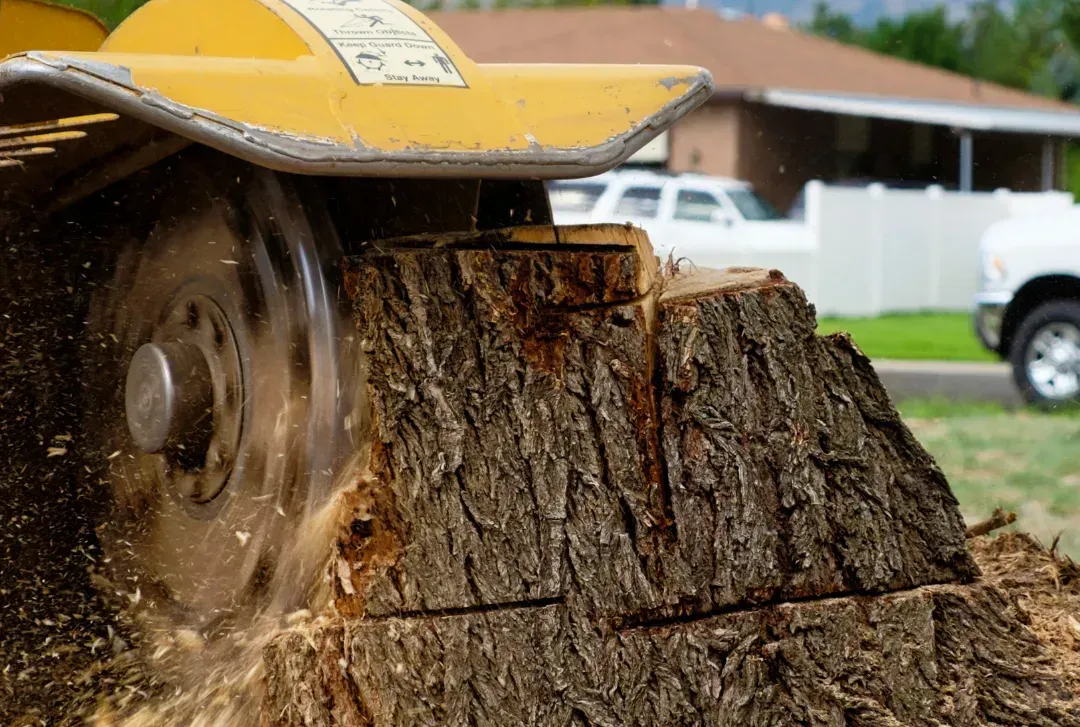
Comparison Between Stump Grinding And Stump Removal
Pest and Disease Prevention
Tree stumps can attract pests like termites, ants, and beetles, which may spread to other areas of the yard. Stumps may also harbor fungal growth or disease that could affect surrounding trees and shrubs.
By removing stumps promptly and completely, professionals prevent infestations and disease transmission. They also provide advice on treating the surrounding soil and maintaining plant health after removal.
5. It Hurts Property Value
A rotting stump in the yard sends the message that the space is not cared for. It makes the landscape appear unclean and reduces the beauty of the outdoor area. When someone looks at a home, whether for renting, buying, or even just visiting, they notice these things. Even if everything else is perfect, a leftover stump can lower curb appeal and affect home value.
If you want to remove dangerous, decaying tree stumps from your property, contact Tree Pros Inc., the trusted choice for stump removal across Los Angeles County, San Diego County, Orange County, San Bernardino County, and Riverside County. We help keep your yard clean, safe, and free from hidden problems.
Conclusion
Weak leaves, bugs, dry branches, or slow growth all point to trouble. Call a
plant health care
expert as soon as you notice a problem. Tree Pros Inc.
provides expert plant health care services across Los Angeles County, San Diego County, Orange County, San Bernardino County, and Riverside County, helping homeowners protect and restore plant vitality through early diagnosis and effective long-term care solutions.
Professional stump removal enhances safety, prevents pest problems, and promotes a healthy, beautiful yard. By evaluating the stump, choosing the right removal method, and offering expert restoration advice, specialists ensure long-term landscape health.
For reliable stump removal throughout Los Angeles County, San Diego County, Orange County, San Bernardino County, and Riverside County, Tree Pros Inc.
provides safe, efficient, and professional services designed to keep your yard secure and thriving.
Conclusion
One of the most immediate risks posed by a leftover tree stump is its potential to cause accidents. Stumps are often positioned in open yard spaces, walkways, or recreational areas where children, guests, or pets move frequently. Over time, grass and weeds can grow around a stump, making it less visible and increasing the danger of tripping or falling. This risk becomes even greater at night or in poorly lit outdoor environments.
From a liability perspective, property owners may be held responsible if someone is injured due to an unremoved stump. In residential neighborhoods, multi-family housing developments, or rental properties, injury-related claims can quickly turn into costly legal and insurance complications. By removing stumps proactively, homeowners reduce exposure to preventable accidents and create safer movement zones throughout their landscape.
Trip Hazards and Liability Concerns
Not every root can be cut just because it's inconvenient, and this is where a certified arborist's judgment matters more than a homeowner's shovel.
Cutting roots too close to the trunk, or cutting too many at once, is a well-documented way to destabilize a tree that looked perfectly healthy the week before. A commonly used guideline is to avoid cutting roots closer to the trunk than a distance equal to three to five times the trunk's diameter, and to never remove more than roughly a third of a tree's root system in a single project. On a mature tree, especially one with a shallow root plate from compacted or poorly drained soil, cutting the wrong roots on one side can leave it far more likely to fail in the next strong wind than the crack it was supposed to fix ever was.
Leaning trees, trees already showing decline, and trees where the damaged root also happens to be one of the two or three main structural roots holding up that side of the canopy are generally poor candidates for pruning at all. In those cases, the safer move is often to leave the root in place and solve the problem on the construction side instead, or to have an honest conversation about whether the tree's long-term future in that exact spot still makes sense.
When Root Pruning Crosses the Line
The tree's overall condition
The critical root zone
Arborists commonly use the tree's trunk diameter to estimate how much root space it needs to stay stable, protecting roughly one foot of radius for every inch of trunk diameter as a starting guideline. A tree with a 14-inch trunk, for example, is generally assumed to need meaningful root space out to around 14 feet from the base. Where that zone overlaps the pool deck or the foundation tells the arborist how much of the conflict is unavoidable given where the tree already sits.
The critical root zone
Roots up to roughly an inch in diameter are usually feeder roots doing the job of absorbing water, and losing some of them is something most established trees tolerate without much issue. Roots between one and three inches, and especially anything larger sitting within the top 12 to 18 inches of soil, are far more likely to be structural roots the tree depends on for anchorage. An arborist traces the roots involved in the damage back toward the trunk to see which category they fall into before recommending anything.
Once there's a real reason to suspect roots, the assessment goes well past a visual check of the crack itself.
Which roots are actually involved
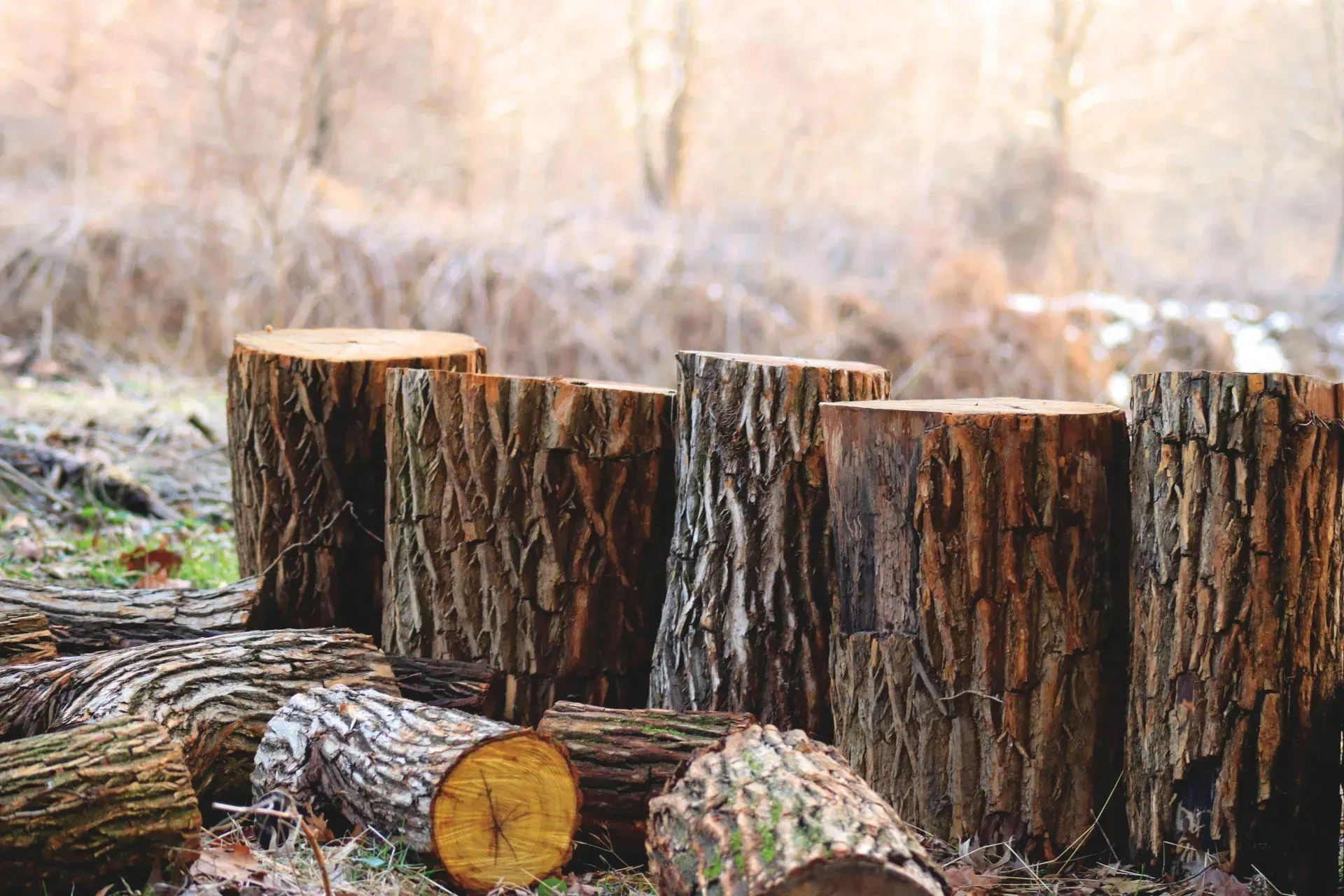
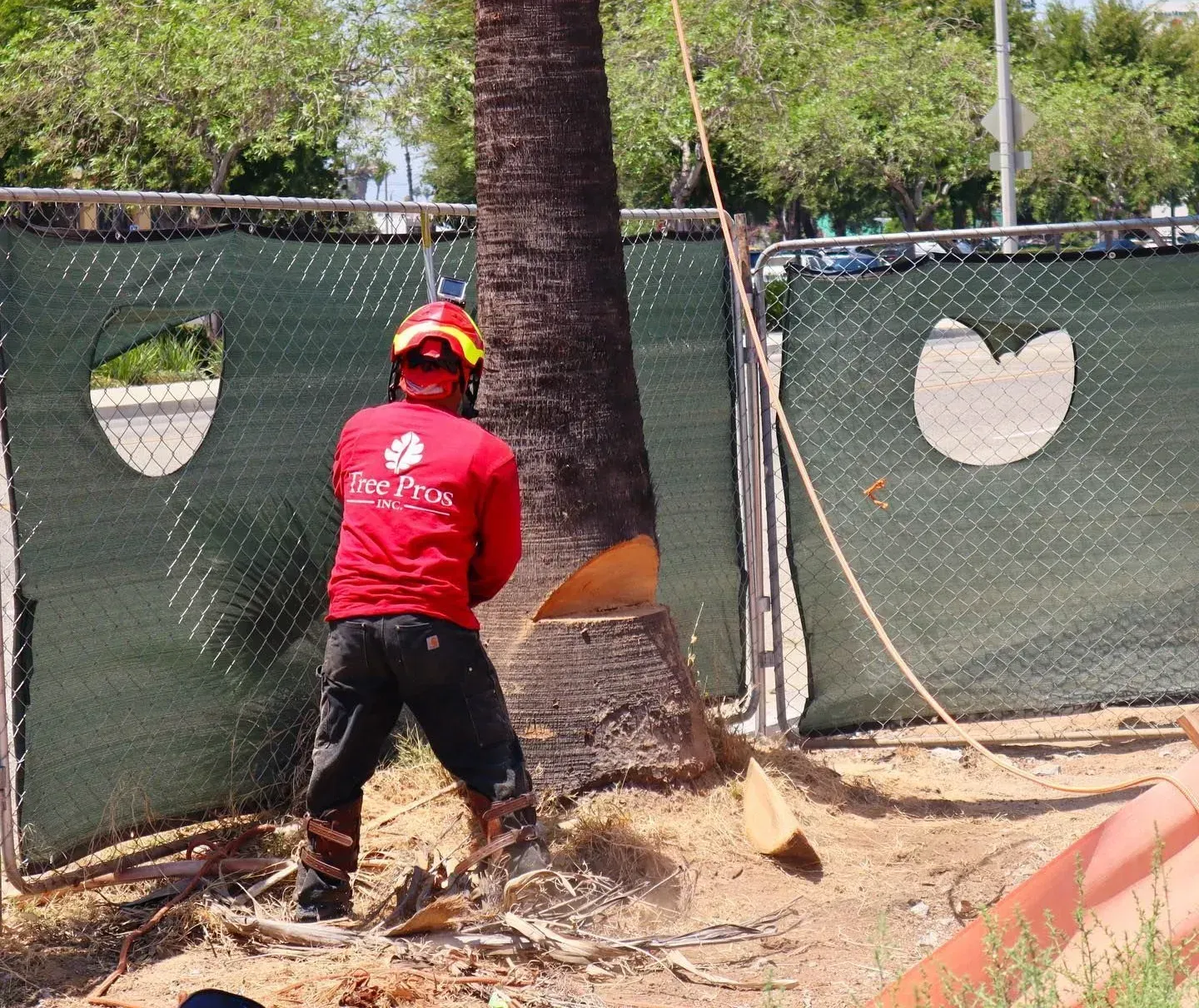
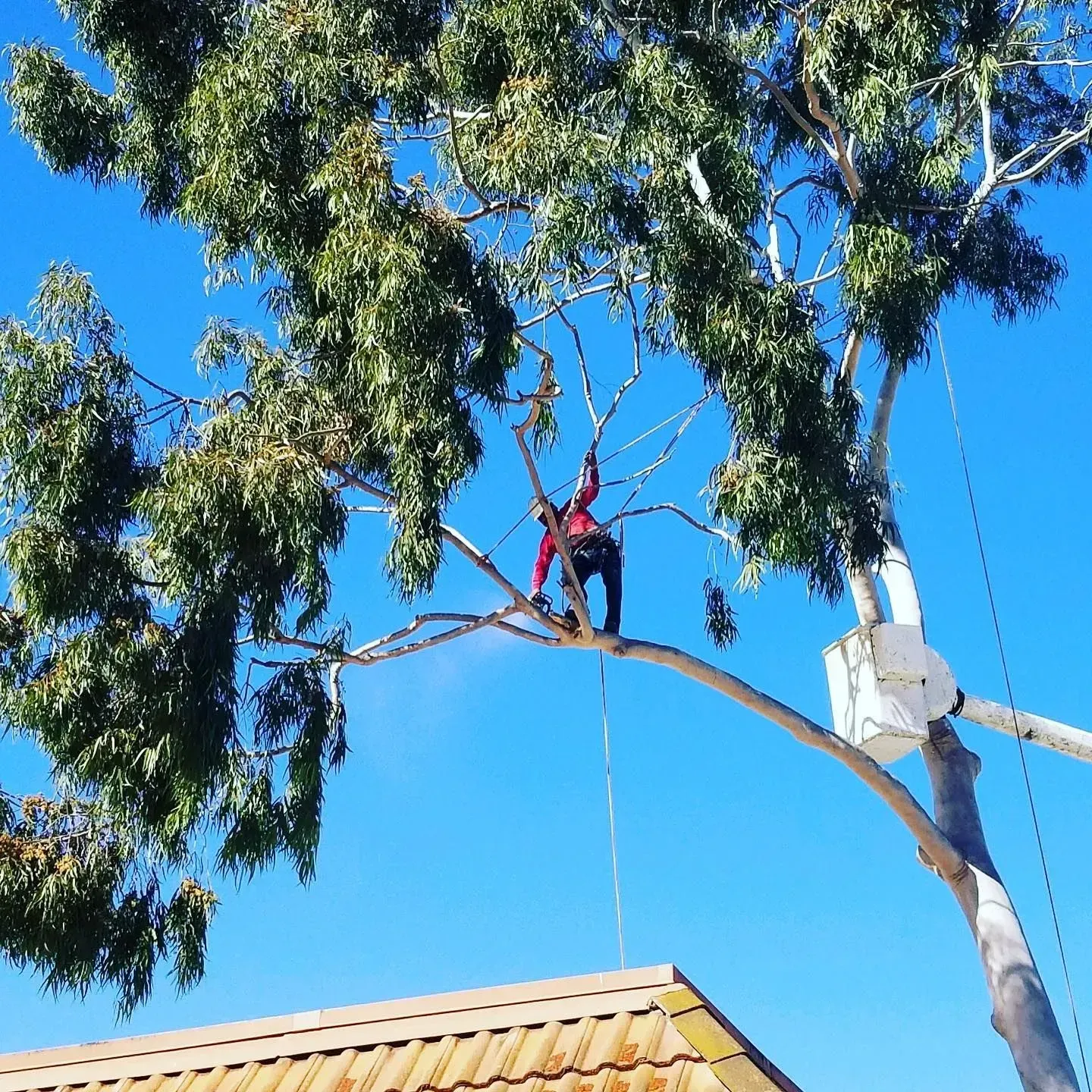
Quick Answer: A tree growing right against a house, garage, or fence line can almost always come down safely, but the method changes once "close" becomes "touching the roofline" or "leaning over the driveway." Instead of felling the tree in one piece, a certified arborist breaks the canopy and trunk into smaller sections, lowers each one with ropes and rigging hardware, and picks an order of operations built around the specific lean, weight distribution, and obstacles on your property. In the tightest spots, a crane can lift entire sections straight up and over the house instead of near it. The tree comes down piece by piece, under control, rather than as one uncontrolled fall.
You planted it decades ago, or it was already mature when you bought the house, and now the trunk sits close enough to the siding that a strong gust makes you wince. Maybe a limb rubs the roofline every time the wind picks up, or the root flare has started to lift the walkway that runs along the foundation. You know the tree probably needs to go, but you also picture the alternative: a huge tree falling the wrong direction and taking out a window, a fence, or the roof itself. That fear is reasonable. It is also the exact problem a technical removal is built to solve.
Why Proximity Changes the Job, Not Just the Difficulty
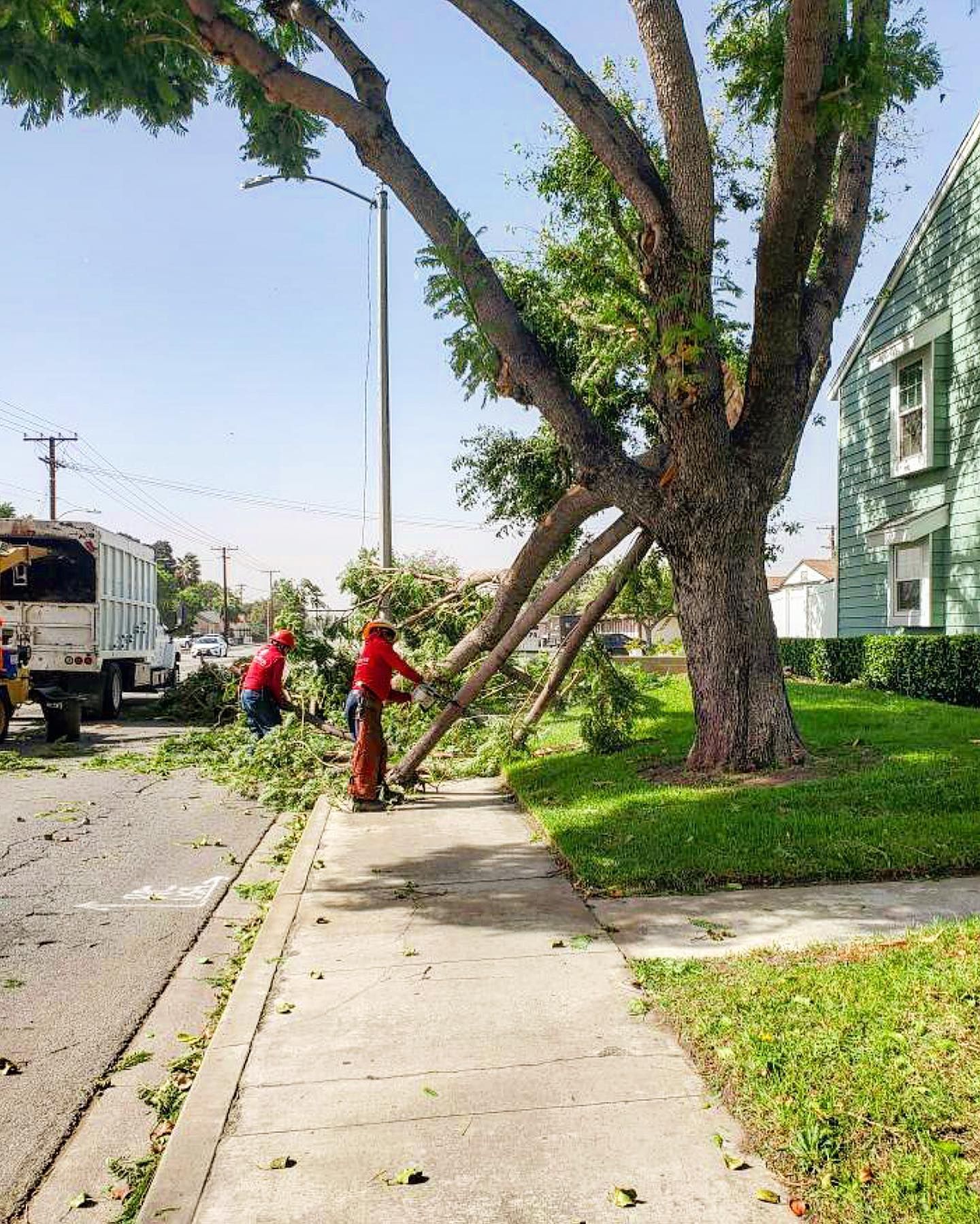
A tree standing in open ground can often be felled in one motion, cut low, guided with a wedge or a pull line, and allowed to fall into clear space. A tree pressed against a structure does not have that luxury. The moment a house, garage, pool, or power line sits inside the tree's fall radius, the whole approach shifts from felling to dismantling.
The target list matters as much as the tree itself
An arborist walks the property and maps every fixed target within reach of the tree: the roofline, gutters, HVAC unit, fence, neighboring structures, overhead lines, and anything below that cannot be moved. A tree fifteen feet from a detached garage gets planned differently than the same tree fifteen feet from a two-story house with a bedroom window facing the trunk.
Lean and weight distribution decide the order of cuts
A trunk leaning toward the structure carries different stresses than one leaning away, and a canopy that is heavier on one side changes how each remaining section will behave once weight is removed from the opposite side. Reading that lean correctly, before the first cut, is what keeps a tall tree from doing something unpredictable halfway through the job.
Access dictates the toolkit
A side yard wide enough for a bucket truck opens up options that a narrow gap between two houses does not. Where equipment cannot reach, more of the work shifts to climbing, rigging, and hand-carried sections, which takes longer but keeps the job controlled in spaces where nothing bigger will fit.
What Gets Assessed Before Any Cut Is Made
Removing a tree close to a house starts well before a saw touches the trunk. A thorough assessment covers ground that a homeowner rarely sees from the yard.
Trunk and limb condition
Decay, included bark, old topping wounds, and cracks all change how a section behaves once it is cut free. A limb that looks solid from below can be hollow at the union, and an arborist checks for that before deciding whether a piece can be dropped whole or needs to be broken down further.
Rigging points
Before any cutting starts, the crew identifies which limbs or trunk sections can safely anchor a rigging line and how much load each point can take. A rigging point chosen without checking the wood underneath it can fail under the weight of the very piece it is meant to control.
Escape routes and ground crew positioning
Every person on the ground has a planned path away from the drop zone before the climber makes a cut, and that plan gets rebuilt as the tree comes apart and the remaining structure changes.
What is directly below
Sprinkler lines, pool equipment, a paver patio, or landscaping worth protecting all factor into where plywood, mats, or padding get placed before the first piece comes down, not after something gets damaged.
The Techniques That Keep the Structure Untouched
Once the assessment is done, the actual removal near a house comes down to a handful of controlled techniques used in combination.
Sectional dismantling
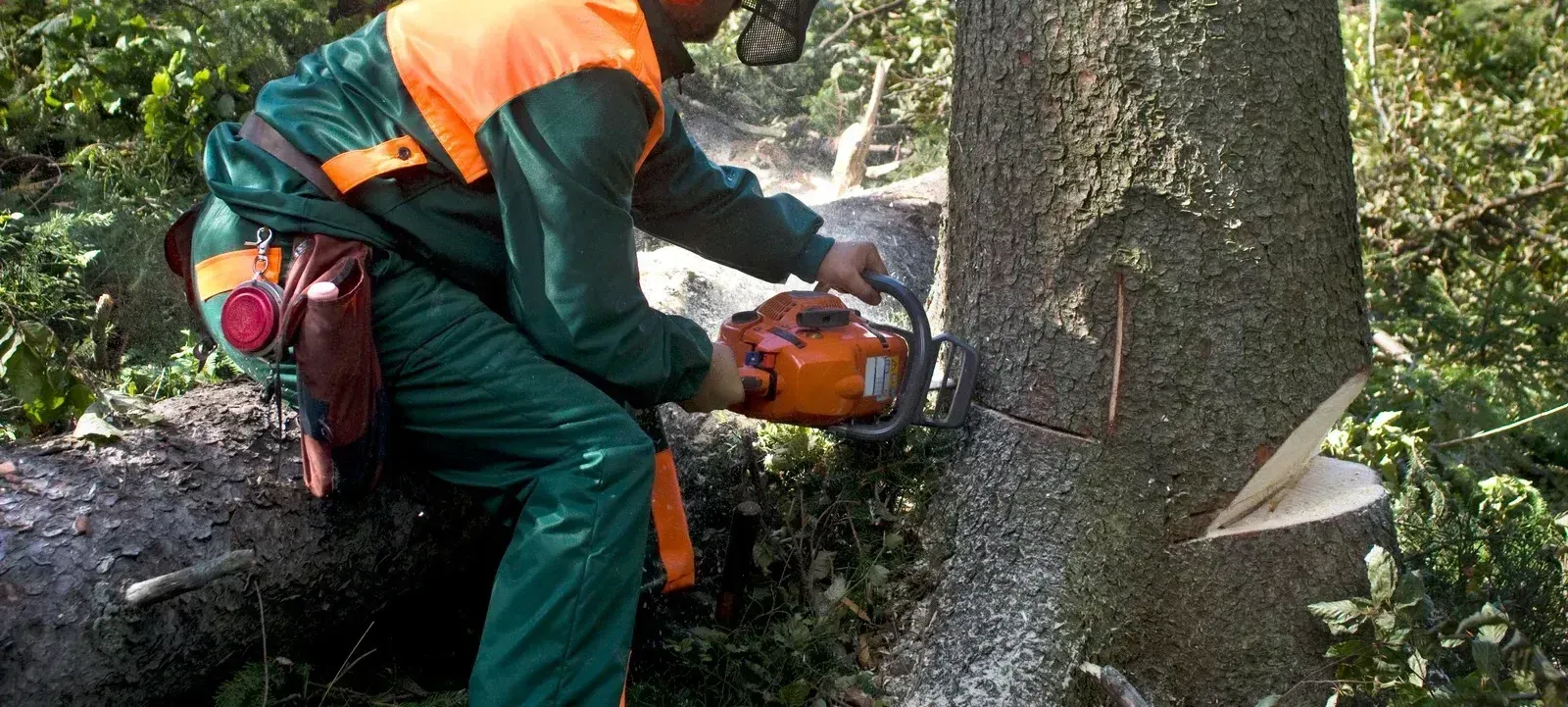
Instead of dropping large sections, the climber removes the tree in small, manageable pieces, working from the top down and from the outside of the canopy inward. Each piece is sized to something the rigging system and ground crew can control, which is what keeps a tree touching the roofline from ever actually touching the roofline during the work itself.
Rope and rigging systems
A rigging line, run through a block or a redirect point, lets the crew lower a cut piece in a controlled arc away from the house instead of letting gravity decide where it lands. Positive blocking, where the rigging point sits above the cut, lifts the piece slightly before it swings clear of the target, which matters most on the limbs growing directly over a roof or a deck.
Crane-assisted removal for the tightest spots
When a tree sits close enough to a structure, or in a side yard too narrow for a bucket truck, a crane can lift entire sections straight up and swing them over the house to a clear drop zone on the other side. This is typically reserved for large trees or truly tight access, since it takes more coordination and equipment than a standard rigged removal, but it turns a job that would otherwise require dozens of small pieces into a handful of controlled lifts.
Ground protection
Plywood sheets, rubber mats, and padding placed under the drop zone and along the crew's walking path protect turf, irrigation lines, and hardscape from the weight of falling sections and repeated foot traffic during a job that can take most of a day.
Tip:
Before the crew arrives, walk the area within the tree's height in every direction and move anything that can be moved, patio furniture, potted plants, grills, garden ornaments, even vehicles parked in range. It gives the crew a cleaner work area and removes one more variable from a job that already has enough of them.
The Part You Cannot See: Root Systems and the Foundation
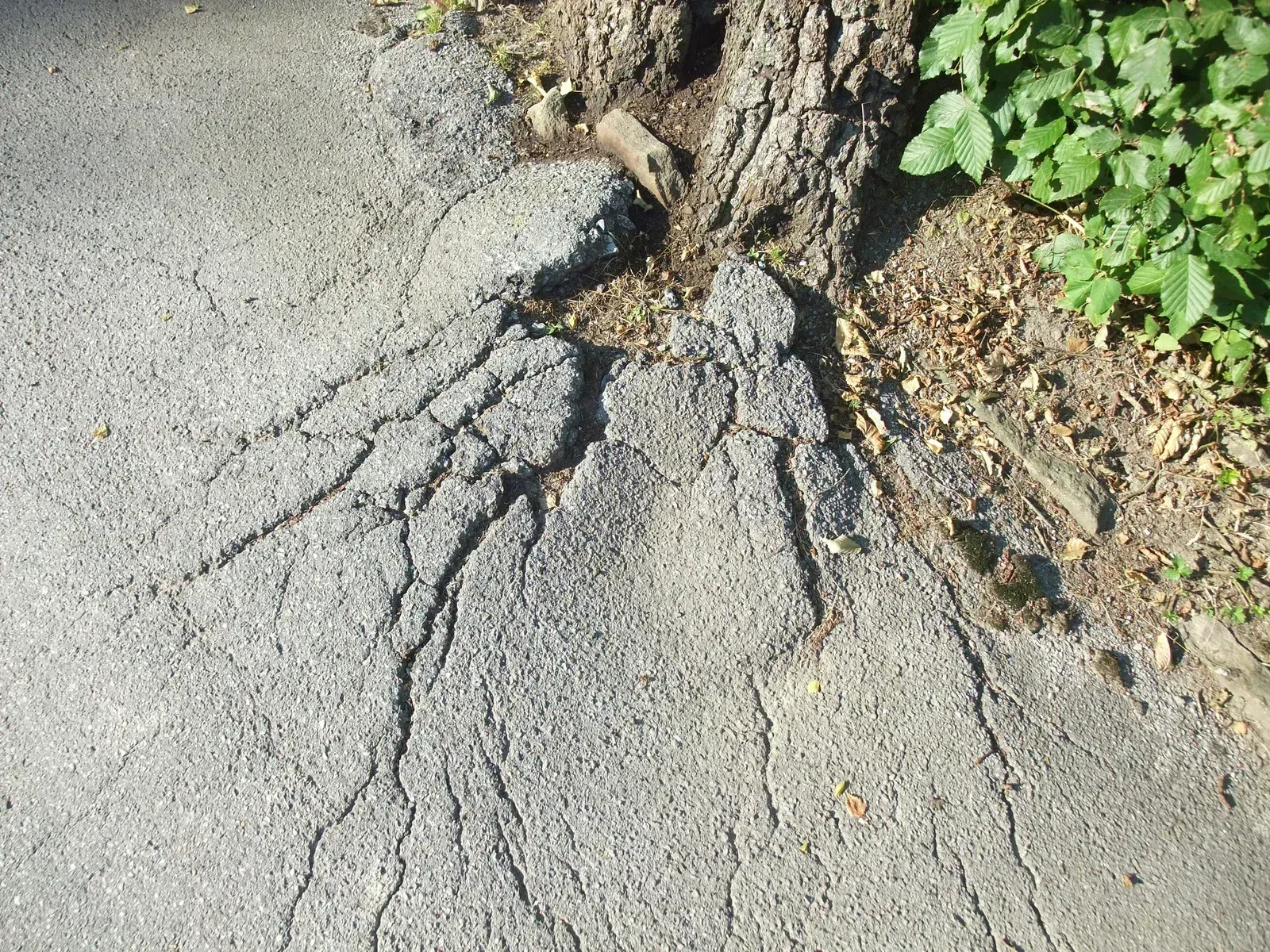
Proximity to a house is not only a canopy problem. A trunk growing close to the foundation usually means the root system extends under or very near the footing, the slab, or nearby plumbing, and that changes what happens after the top of the tree is gone.
Arborists commonly use trunk diameter as a rough guide to how far a tree's most important structural roots extend, allowing roughly a foot of root space for every inch of trunk diameter measured at chest height. A tree with an 18-inch trunk growing five feet from the foundation is very likely to have structural roots running directly beneath or alongside it. That matters for how the stump gets handled afterward, since aggressive grinding close to a foundation, a gas line, or buried plumbing carries its own set of risks that a careful crew accounts for separately from the removal itself.
Where the Real Danger Lives
Removing a large tree from open ground carries risk. Removing one wedged against a house multiplies it, because every mistake has a target sitting right where the tree is falling.
A tree close enough to a structure to worry you is close enough that a miscalculated cut, an unnoticed lean, or a rigging point that fails under load can put a section of trunk through a roof, a window, or a fence in seconds. Overhead power lines running near the property add another layer of danger that changes as the canopy comes apart and previously shielded lines become exposed. Height, weight, proximity, and wood you cannot see the condition of until it is already cut all stack together here.
That combination is exactly why this category of removal sits at the technical end of arborist work, not the routine end. It takes longer to plan than it does to cut.
Warning: Do not attempt to remove, or even heavily trim, a tree that is leaning toward or growing against your house yourself. A chainsaw at height, near a structure, with no rigging system to control where the cut piece goes is one of the most dangerous combinations in home tree work, and a section that goes the wrong way can cause serious injury or send a limb through a roof or window in an instant. This work belongs to a trained crew with the rigging equipment and experience to control every piece before it is cut.
What Happens Once the Tree Is Down
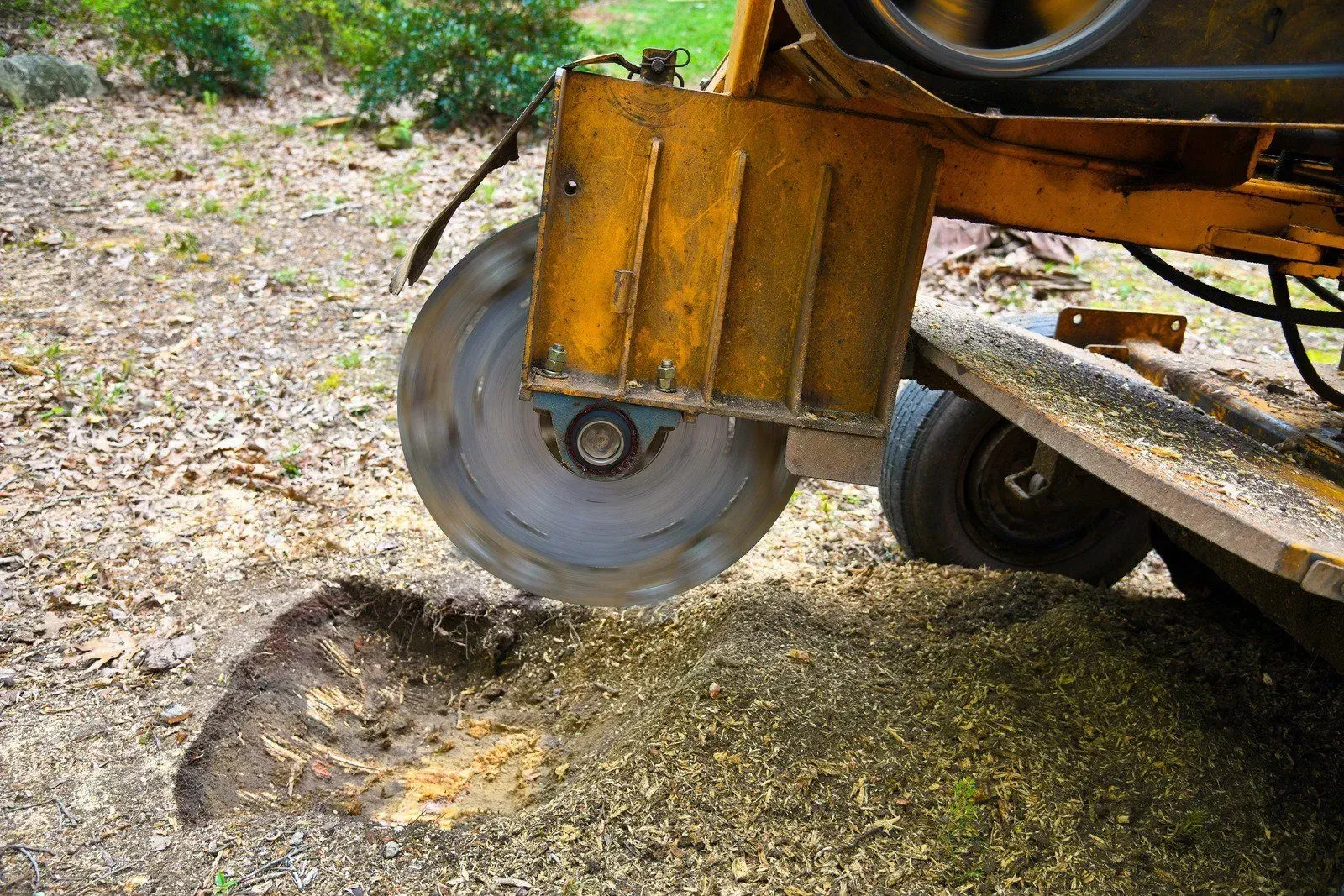
The visible part of the job, cutting the canopy and trunk apart, is usually only half the work. Once the last section is on the ground, the crew hauls debris, chips smaller material on site or removes it, and leaves the area cleared unless you have asked for firewood or mulch to stay behind. The stump is a separate decision. Grinding it flush with the surrounding grade is common, but where the stump sits close to a foundation, walkway, or buried line, an arborist may recommend a shallower grind or a different removal method to avoid disturbing what is underground nearby. If you are planning to replant in the same general area, that is worth discussing before the stump comes out, since the old root system and any grinding debris affect what will grow well in that spot afterward.
Frequently Asked Questions
How close does a tree have to be to a house before it needs a technical removal instead of a standard one?
There's no single distance for every tree; it depends on height, lean, and canopy spread. If any part could reach the house if it fell, plan for sectional dismantling and rigging.
Can a tree that close to the house really come down with zero damage?
Yes, in the overwhelming majority of cases, when planned and rigged correctly. Sectional removal controls where every piece goes. The rare exception is unexpected wood failure from poor structural condition mid-cut.
Will removing a tree close to my house damage my foundation or the ground around it?
Removing the canopy and trunk doesn't disturb the foundation. Stump removal needs more care here, since grinding near a foundation, walkway, or buried utility line can cause problems if not planned carefully.
Do I need to be home during a tree removal near my house?
It helps for the initial assessment but isn't required for removal itself, as long as the crew has access and you've discussed the plan beforehand. Many prefer being away during crane work
What should I do with plants and landscaping near the tree before removal day?
Move anything portable out of the tree's height radius in every direction, including pots, furniture, and decorations. For landscaping that can't move, mention it during the assessment so the crew can plan around it.
Removing a Tree Without Risking Your Home
A tree crowding your house does not have to end in damage, guesswork, or a gamble on which way the trunk falls. Sectional dismantling, careful rigging, and the right equipment for the access you have turn a genuinely risky situation into a controlled, methodical process. The canopy comes apart piece by piece, each section lowered exactly where it needs to go, and the structure that tree has been leaning against for years stays exactly as it was.
What separates a
close-proximity removal
from a routine one is the planning that happens before any cut is made, not the size of the saw. Tree Pros Inc.
brings 22
years of experience to every project across Los Angeles County, San Diego County, Orange County, San Bernardino County, and Riverside County, reading each tree's lean, weight, and access before deciding how it comes down safely.
Recent Posts