HOME / SERVICE AREA /

LOCAL TREE CARE

Post-Removal Grinding: Why a Fresh Stump Isn't the Same Job as an Old One

September 23, 2026

Check out Our Recent Blogs
Person in red shirt climbing a tree with ropes outdoors near a building and grass area
August 29, 2026
Learn how to safely remove trees & stumps without damage. Contact Tree Pros Inc. for expert services in Chino, CA.
Chainsaw cutting through a large log, with wood chips flying in a yard.
August 14, 2026
A tree stump can create many problems when left to stick around the property for long. It can prove hazardous for lawn health and property safety. Whether a bad storm has caused a tree to fall in the yard or you have recently removed a tree, it is essential to eliminate the unsightly stump from the property without any delay. Stump removal or grinding in Chino, CA, requires a lot of time, powerful tools, and elbow and grease, but it is critical to go ahead with it for several reasons.
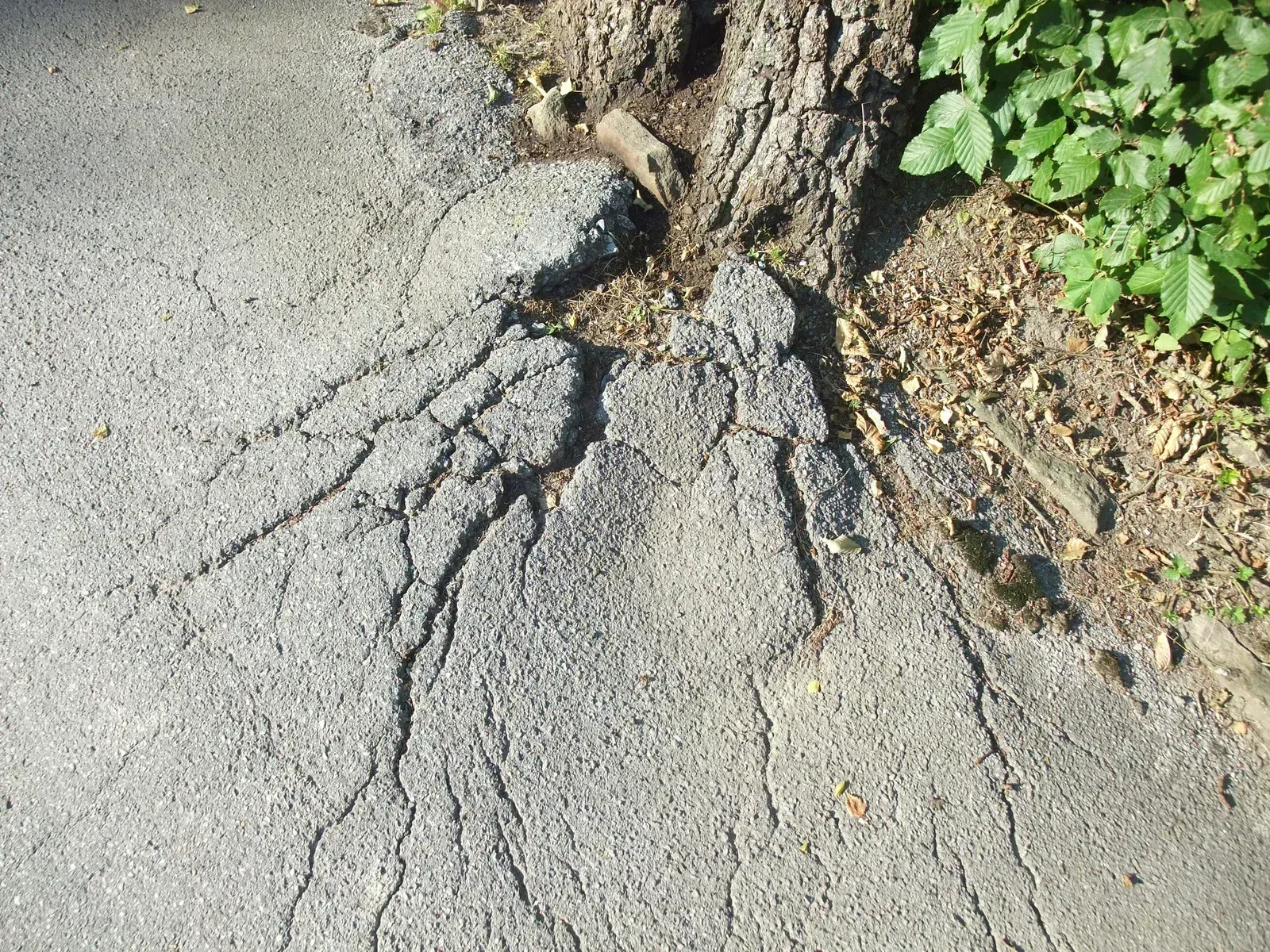
Cracked asphalt pavement beside a tree trunk and small green plants
July 31, 2026
Learn how to manage tree roots causing cracks in your pool deck. Contact us for expert advice on pruning & barriers.
Worker in orange vest using a chainsaw to cut a tree trunk in a forest.
June 27, 2026
Trees are a vital part of any landscape, providing shade, aesthetic appeal, and environmental benefits. However, there are times when a tree
Worker in red shirt and yellow helmet cutting a tree trunk with a chainsaw near a fenced area.
May 13, 2026
Trees provide essential benefits to properties, offering shade, beauty, and ecological balance. However, when a tree becomes diseased,
Worker trimming a tall eucalyptus tree beside a house roof under a bright blue sky
April 21, 2026
Trees are invaluable assets to any property. They provide shade, enhance curb appeal, improve air quality, and even contribute to energy efficiency
Close-up of a yellow construction machine grinding a shallow hole in gravel, with debris scattering.
March 23, 2026
Trees play a critical role in shaping the aesthetic appeal, environmental health, and overall value of residential and commercial properties.
Yellow machinery wheel cutting a deep rut in gravel and soil outdoors
February 10, 2026
Removing tree stumps is a critical step in maintaining both the safety and aesthetics of your property.
Cut logs and tree stumps in a wooded area with dry grass in the background
January 31, 2026
Tree stumps are often overlooked remnants in residential and commercial landscapes, left behind after tree removal due to cost, convenience, or sheer neglect.
Show More

Plant healthcare professionals are leading the way in designing and implementing water-wise landscapes that reduce irrigation needs. Techniques such as drought-tolerant plants, efficient irrigation systems, and rainwater harvesting are used. This way, landscapes remain beautiful and sustainable, even in areas with less water.

4. Implementing Water-wise Landscaping

Bees, butterflies, and other pollinating friends are essential in our ecosystems. Professionals are building gardens that welcome these creatures. Planting a mix of flowers that bloom at different times of the year ensures that pollinators have a consistent food source. Avoiding pesticides and providing natural habitats can make our gardens safe havens for pollinators.

6. Supporting Pollinators in Our Gardens

9. Light Management: Mimicking Natural Rhythms

Especially vital for indoor plants, understanding a plant's light needs is crucial. Too much can scorch them, while too little can lead to weak growth. If natural light is insufficient, consider LED grow lights that can be tailored to a plant's specific needs.

Professionals use technology to help them do more efficient landscaping. From sophisticated irrigation controllers that adjust watering based on weather conditions to drones that monitor plant health from above, plant healthcare professionals are leveraging technology to make landscape management more efficient and effective.


Plant healthcare professionals are most important in landscape management. Through their dedication to sustainable practices, they are enhancing the beauty and health of landscapes and contributing to the planet's well-being. They show how it is possible to create outdoor spaces that are both stunning and sustainable.

7. Using Technology

Some firewood delivery services offer sustainably sourced wood for eco-conscious customers. This means the wood comes from forests that are replanted and managed responsibly. You can enjoy your fire by choosing a sustainable option, knowing you're not harming the environment.

Sustainable Firewood Options

The best delivery services go beyond just dropping off wood. Some companies offer friendly and knowledgeable staff who can answer your questions about firewood types, burning techniques, or fireplace maintenance. This personalized touch can make a big difference in your firewood buying experience.

Delivery with a Personal Touch

Assess the Situation

Water scarcity is a constant concern in Southern California. Smart irrigation systems use a combination of sensors, weather data, and historical water usage patterns to create an irrigation plan that delivers the precise amount of water each plant needs. This not only conserves water but also prevents plants from suffering from water stress, which can weaken them and make them more susceptible to disease.


These advanced technologies are just the beginning of a revolution in plant healthcare. As research and development continue, we can expect even more innovative solutions to emerge, such as gene editing for disease resistance and robots for targeted weed removal. By embracing these advancements, Southern California's farmers can ensure the health of their crops, optimize resource use, and contribute to a more sustainable agricultural future, feeding a growing population while protecting the environment for generations to come.

5. Biological Pest Control: A Sustainable Approach

Comparison Between Stump Grinding And Stump Removal

Pest and Disease Prevention

Tree stumps can attract pests like termites, ants, and beetles, which may spread to other areas of the yard. Stumps may also harbor fungal growth or disease that could affect surrounding trees and shrubs.


By removing stumps promptly and completely, professionals prevent infestations and disease transmission. They also provide advice on treating the surrounding soil and maintaining plant health after removal.

5. It Hurts Property Value

A rotting stump in the yard sends the message that the space is not cared for. It makes the landscape appear unclean and reduces the beauty of the outdoor area. When someone looks at a home, whether for renting, buying, or even just visiting, they notice these things. Even if everything else is perfect, a leftover stump can lower curb appeal and affect home value.


If you want to remove dangerous, decaying tree stumps from your property, contact Tree Pros Inc., the trusted choice for stump removal across Los Angeles County, San Diego County, Orange County, San Bernardino County, and Riverside County. We help keep your yard clean, safe, and free from hidden problems.

Conclusion

Weak leaves, bugs, dry branches, or slow growth all point to trouble. Call a plant health care expert as soon as you notice a problem. Tree Pros Inc. provides expert plant health care services across Los Angeles County, San Diego County, Orange County, San Bernardino County, and Riverside County, helping homeowners protect and restore plant vitality through early diagnosis and effective long-term care solutions.

Professional stump removal enhances safety, prevents pest problems, and promotes a healthy, beautiful yard. By evaluating the stump, choosing the right removal method, and offering expert restoration advice, specialists ensure long-term landscape health.


For reliable stump removal throughout Los Angeles County, San Diego County, Orange County, San Bernardino County, and Riverside County, Tree Pros Inc. provides safe, efficient, and professional services designed to keep your yard secure and thriving.

Conclusion

One of the most immediate risks posed by a leftover tree stump is its potential to cause accidents. Stumps are often positioned in open yard spaces, walkways, or recreational areas where children, guests, or pets move frequently. Over time, grass and weeds can grow around a stump, making it less visible and increasing the danger of tripping or falling. This risk becomes even greater at night or in poorly lit outdoor environments.


From a liability perspective, property owners may be held responsible if someone is injured due to an unremoved stump. In residential neighborhoods, multi-family housing developments, or rental properties, injury-related claims can quickly turn into costly legal and insurance complications. By removing stumps proactively, homeowners reduce exposure to preventable accidents and create safer movement zones throughout their landscape.

Trip Hazards and Liability Concerns

Escape routes and ground crew positioning

Not every root can be cut just because it's inconvenient, and this is where a certified arborist's judgment matters more than a homeowner's shovel.


Cutting roots too close to the trunk, or cutting too many at once, is a well-documented way to destabilize a tree that looked perfectly healthy the week before. A commonly used guideline is to avoid cutting roots closer to the trunk than a distance equal to three to five times the trunk's diameter, and to never remove more than roughly a third of a tree's root system in a single project. On a mature tree, especially one with a shallow root plate from compacted or poorly drained soil, cutting the wrong roots on one side can leave it far more likely to fail in the next strong wind than the crack it was supposed to fix ever was.


Leaning trees, trees already showing decline, and trees where the damaged root also happens to be one of the two or three main structural roots holding up that side of the canopy are generally poor candidates for pruning at all. In those cases, the safer move is often to leave the root in place and solve the problem on the construction side instead, or to have an honest conversation about whether the tree's long-term future in that exact spot still makes sense.

When Root Pruning Crosses the Line

The tree's overall condition

The critical root zone

Arborists commonly use the tree's trunk diameter to estimate how much root space it needs to stay stable, protecting roughly one foot of radius for every inch of trunk diameter as a starting guideline. A tree with a 14-inch trunk, for example, is generally assumed to need meaningful root space out to around 14 feet from the base. Where that zone overlaps the pool deck or the foundation tells the arborist how much of the conflict is unavoidable given where the tree already sits.

Arborists commonly use the tree's trunk diameter to estimate how much root space it needs to stay stable, protecting roughly one foot of radius for every inch of trunk diameter as a starting guideline. A tree with a 14-inch trunk, for example, is generally assumed to need meaningful root space out to around 14 feet from the base. Where that zone overlaps the pool deck or the foundation tells the arborist how much of the conflict is unavoidable given where the tree already sits.

The critical root zone

Roots up to roughly an inch in diameter are usually feeder roots doing the job of absorbing water, and losing some of them is something most established trees tolerate without much issue. Roots between one and three inches, and especially anything larger sitting within the top 12 to 18 inches of soil, are far more likely to be structural roots the tree depends on for anchorage. An arborist traces the roots involved in the damage back toward the trunk to see which category they fall into before recommending anything.

Once there's a real reason to suspect roots, the assessment goes well past a visual check of the crack itself.

Which roots are actually involved
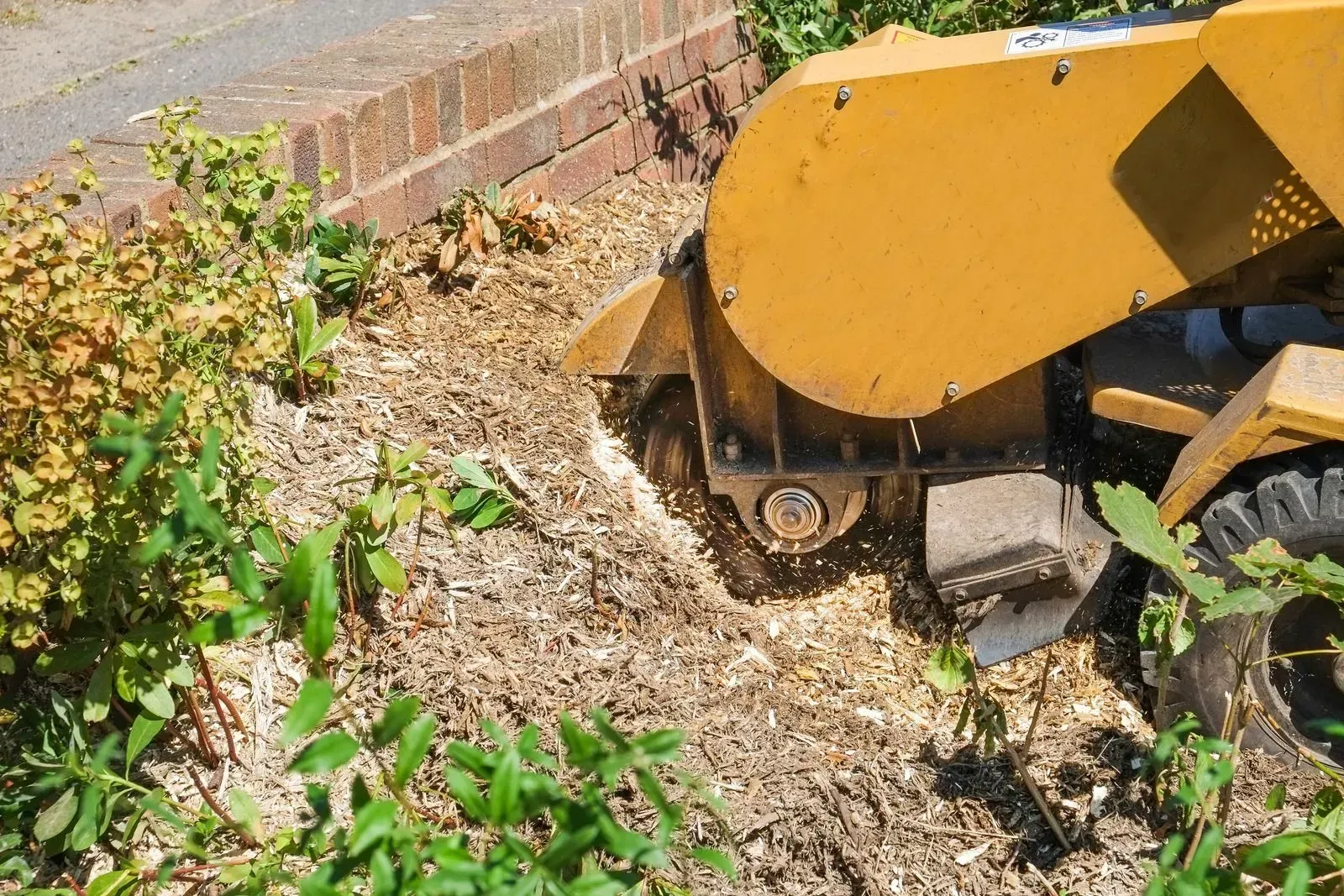
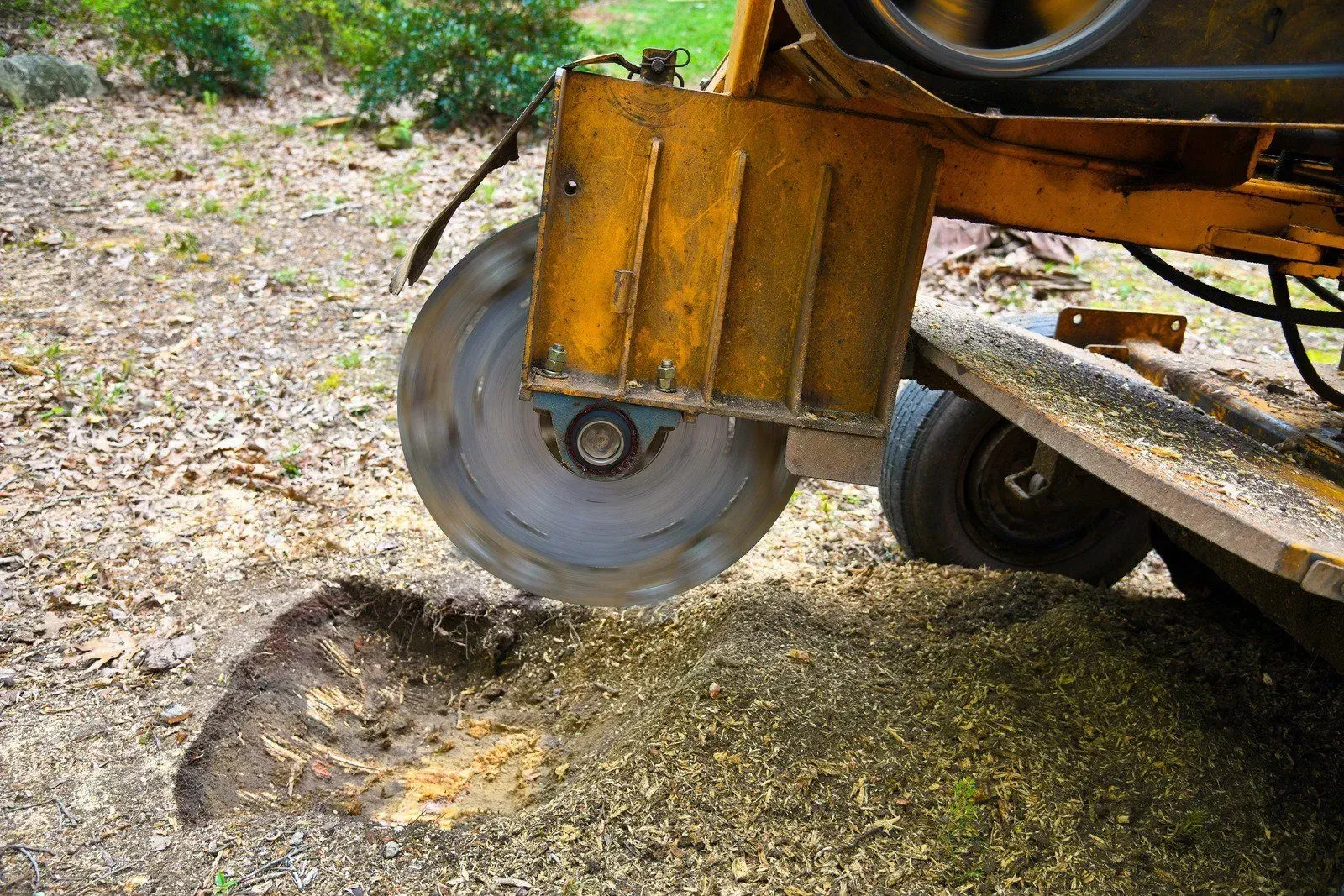
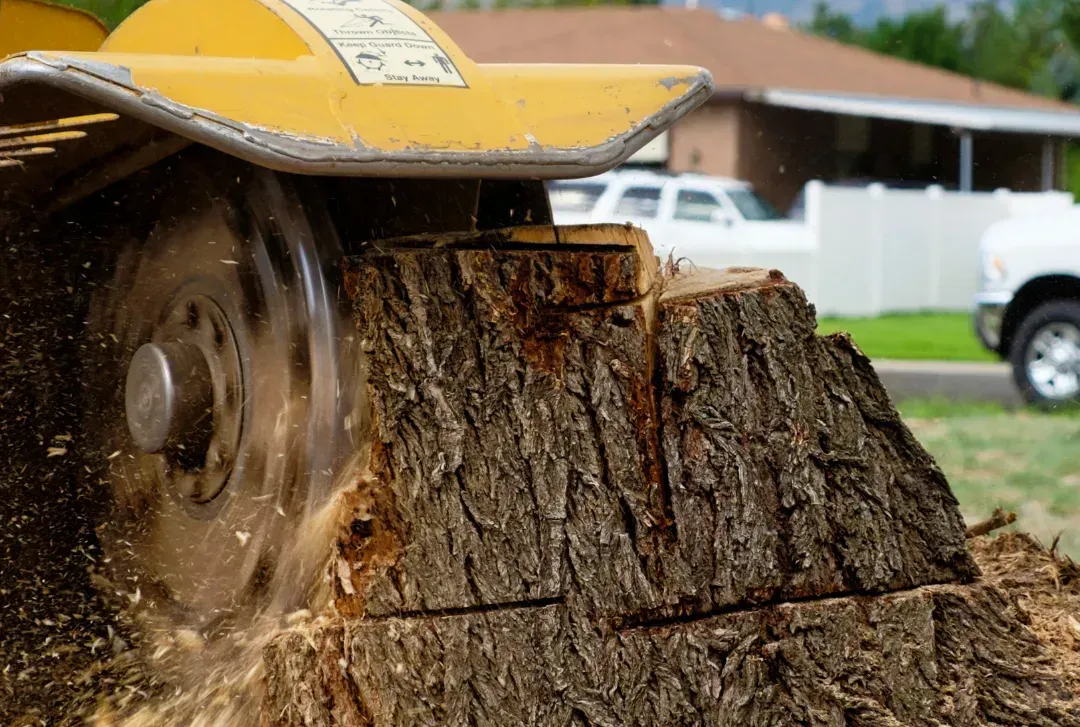
Quick Answer: Post-removal grinding is stump grinding done immediately or soon after a tree comes down, rather than months or years later. The stump is still biologically active at that point, so grinding it sooner interrupts regrowth before it gets established. The job site is also already disturbed from the removal itself, which changes how crews protect the lawn, hardscape, and irrigation nearby. Grinding depth decisions often get made at this stage too, since replanting plans are usually still fresh in mind.


Sawdust is still scattered across the grass when the last section of trunk gets loaded onto the truck, leaving behind a pale, damp stump where a mature tree stood minutes earlier. That fresh stump isn't simply a smaller version of the weathered stumps some properties carry for years. It's still biologically active, sitting in a work area that's already been disturbed by the removal itself, and it usually comes with a decision about depth and replanting that hasn't been made yet. Grinding it right away is a different job than grinding one that's been sitting untouched since a storm or a landscaping project years earlier.

A Root System That Hasn't Gotten the Message Yet

Cutting down a tree doesn't shut off the root system underneath it right away. Roots hold stored energy, and depending on the species, many trees respond to that stress by pushing sucker growth up through the stump and the surrounding soil. This response tends to be strongest in the first growing season after the cut, while those reserves are freshest.


Why The Window Matters

A stump that's been sitting for a few seasons has often already gone through its strongest regrowth attempts, with any sucker growth cut back repeatedly until the roots exhaust themselves. A freshly cut stump is usually still inside that early window. Grinding it down below the surrounding soil line removes the tissue new shoots would otherwise grow from, before that first push of regrowth gets a chance to take hold.


Species Plays A Role Too

Some trees send up vigorous sucker growth from a fresh cut and continue for a season or two if the stump is left in place, while others barely respond at all. Crews familiar with the species just removed can usually tell you which category a given stump falls into.

The Yard Is Still an Active Work Area

Grinding a stump that's been sitting for years usually means working around a yard that's settled back to normal, with grass grown in and any nearby beds established. Post-removal grinding is different because the ground around the stump is still showing signs of the removal itself.


What's Already Changed

Dropping or lowering trunk sections, running a chipper, and moving equipment across the lawn all leave some wear behind, so by the time grinding starts, the grass and any nearby hardscape may already carry marks from the removal. Crews grinding a fresh stump are working with that existing disturbance in mind, not just the new pass of equipment coming in for the grind.


Utilities Get Checked Twice

Irrigation lines and underground utilities that were flagged before the tree came down get checked again before the grinder starts, since a second piece of heavy equipment is now working the same patch of ground.


Debris Comes From Two Sources 

Sawdust and small offcuts from felling and bucking the tree are often still scattered nearby when grinding begins. Cleanup after a post-removal job typically clears both the fresh grindings and whatever the removal itself left behind, rather than just one kind of debris.

Warning: If sprinkler heads, drip lines, or low-voltage wiring were exposed or moved during the removal, point them out again before grinding starts. A second piece of equipment working the same ground is more likely to catch something that shifted after the first pass.

Depth Decisions Get Made While the Plan Is Still Fresh

A stump ground for a lawn or a mulch bed doesn't need to go as deep as one being cleared to make room for a new tree or a paver base in the same footprint. Standard grinding, usually 6 to 12 inches below grade, works fine for grass and general landscaping, while a spot meant for new planting or construction typically calls for deeper grinding so the old root mass doesn't get in the way.


Because post-removal grinding happens while the tree removal is still fresh, this is usually the point where that decision gets made. On an old stump that's been sitting for years, the depth conversation often happens again later, once a property owner finally settles on a plan for the space. Right after removal, the plan and the grinding can happen in the same conversation.

Tip: Mention any replanting plans, even tentative ones, before grinding day. Grinding to the right depth the first time avoids a return visit to grind deeper later if a new tree ends up going in the same spot.

One Mobilization Instead of Two

Handling removal and grinding as connected phases of the same job means the crew that already assessed the tree, the root spread, and nearby structures during removal is the same crew grinding the stump, rather than a separate visit starting that assessment over. Equipment already on site, including the truck used to haul away trunk sections, can move directly into position for the grind instead of a second mobilization days or weeks later.

What the Space Looks Like When Grinding Day Ends

Clearing an old stump often means working carefully around landscaping that's grown up close to it over the years. Post-removal grinding usually works with a more open patch of ground, since the tree's canopy and root zone are only just opening up. The stump and major surface roots are ground down below the surrounding soil, leaving loose soil and wood chips that can be leveled, amended, and reseeded or planted right away.

After the Sawdust Settles

Grinding a stump right after a tree comes down isn't a smaller, simpler version of grinding one that's been sitting for years. The roots are still active, the ground around it is already disturbed, and decisions about what happens next are usually still on the table. Treating post-removal grinding as its own phase of the job, with its own timing, depth, and site considerations, is what actually closes out the removal instead of leaving a stump behind to deal with later.

Frequently Asked Questions

  • Does a stump need to be ground the same day the tree comes down?

    Not necessarily. Many properties handle it that way since the crew and equipment are already on site, but a stump can also be ground weeks or months later without any added difficulty, as long as the area stays accessible.

  • Is a freshly cut stump handled differently from one that's been in the ground for years?

    The equipment does the same job either way, breaking the stump and surface roots down below grade. The difference is timing. A fresh stump is still biologically active, so grinding it sooner interrupts regrowth attempts before they get established, while an older stump has usually already gone through that phase.

  • Will grinding right after removal disturb any new landscaping nearby?

    Crews check the surrounding area, including irrigation lines, hardscape, and any recent plantings, before grinding starts, and set up the work zone to keep the immediate site separate from anything that doesn't need to be disturbed.

  • How soon does a cut stump start sending up new growth?

    When it happens, regrowth usually begins within the same growing season the tree was cut, while the root system still holds stored energy. Grinding below grade removes the tissue those shoots would otherwise grow from.

  • Does post-removal grinding leave more debris than grinding an older stump?

    Often, yes. The felling and bucking process leaves its own sawdust and offcuts behind before grinding even starts, so cleanup after a post-removal job typically clears both sets of debris in the same visit.

  • Can grinding be scheduled later if a replanting decision isn't made yet?

    Yes. Grinding doesn't have to happen immediately after removal. Waiting until a replanting plan is set just means the grind depth can be chosen to match that plan, rather than guessed at ahead of time.

Why Timing Changes the Whole Grinding Job

A fresh stump and a weathered one might look similar from the driveway, but the ground underneath tells a different story. Roots that are still holding stored energy respond to grinding differently than roots that gave up trying to regrow seasons ago, and a yard still marked by removal equipment needs a different kind of care than one that settled back to normal years earlier. Recognizing that difference is what keeps a stump from becoming an unfinished piece of a larger job.


For crews handling this work across Los Angeles County, San Diego County, Orange County, San Bernardino County, and Riverside County, that distinction gets made on nearly every job site. Tree Pros Inc. has spent 22 years learning which stumps need grinding the same week and which can wait, and that experience shapes every depth and timing call made in the field. The result is a stump that's actually finished, not just cut down and left behind.

Recent Posts

Person in red shirt climbing a tree with ropes outdoors near a building and grass area
August 29, 2026
Learn how to safely remove trees & stumps without damage. Contact Tree Pros Inc. for expert services in Chino, CA.
Chainsaw cutting through a large log, with wood chips flying in a yard.
August 14, 2026
A tree stump can create many problems when left to stick around the property for long. It can prove hazardous for lawn health and property safety. Whether a bad storm has caused a tree to fall in the yard or you have recently removed a tree, it is essential to eliminate the unsightly stump from the property without any delay. Stump removal or grinding in Chino, CA, requires a lot of time, powerful tools, and elbow and grease, but it is critical to go ahead with it for several reasons.
Cracked asphalt pavement beside a tree trunk and small green plants
July 31, 2026
Learn how to manage tree roots causing cracks in your pool deck. Contact us for expert advice on pruning & barriers.
Worker in orange vest using a chainsaw to cut a tree trunk in a forest.
June 27, 2026
Trees are a vital part of any landscape, providing shade, aesthetic appeal, and environmental benefits. However, there are times when a tree
Worker in red shirt and yellow helmet cutting a tree trunk with a chainsaw near a fenced area.
May 13, 2026
Trees provide essential benefits to properties, offering shade, beauty, and ecological balance. However, when a tree becomes diseased,
Worker trimming a tall eucalyptus tree beside a house roof under a bright blue sky
April 21, 2026
Trees are invaluable assets to any property. They provide shade, enhance curb appeal, improve air quality, and even contribute to energy efficiency
Close-up of a yellow construction machine grinding a shallow hole in gravel, with debris scattering.
March 23, 2026
Trees play a critical role in shaping the aesthetic appeal, environmental health, and overall value of residential and commercial properties.
Yellow machinery wheel cutting a deep rut in gravel and soil outdoors
February 10, 2026
Removing tree stumps is a critical step in maintaining both the safety and aesthetics of your property.
Cut logs and tree stumps in a wooded area with dry grass in the background
January 31, 2026
Tree stumps are often overlooked remnants in residential and commercial landscapes, left behind after tree removal due to cost, convenience, or sheer neglect.
Yellow skid steer clearing leaves beside a brick wall and garden bed
December 30, 2025
Tree removal is often seen as the final step in maintaining or redesigning a landscape, but the remaining stump is more than just an aesthetic inconvenience.
Show More